Showing posts with label Holiday Series. Show all posts

Sunday, December 29, 2013

X-Mas and Friends in Greece!

It may be after Christmas, but in many countries the holidays are still well under way. Today, I’m writing about another traditionally Christian country, this one Greek Orthodox. Yes, Greece is traditionally Christian. The time of the twelve gods of Mount Olympus has long since passed. But I recommend you look into Saturnalia, the Roman festival which is the source for many Christmas traditions. Because we all know how much the Romans loved to rip off the Greeks. Our final holiday post in brought to you with help from Katherine Zaimes, of Steve’s Pizza fame. Let’s all give her a round of applause!
But before we get into that, here's a recap of the festive nations we've visited so far.
Day 1: Nate Presenting Thailand
Day 2: Hannah Presenting Switzerland
Day 3: Holly Presenting Burkina Faso
Day 4: Nate Presenting Japan
Day 5: Hannah Presenting Basque Country
Day 6: Holly Presenting Brazil
Day 7: Holy Presenting the Netherlands
Day 8: Hannah Presenting the United Kingdom
Day 9: Nate Presenting Mexico
Day 10: Holly Presenting Germany
Day 11: Hannah Presenting the Dominican Democratic Republic of the Congo

Now that that's out of the way, let's talk that jolly old elf that with the round belly that's the star of the Christmas season, Santa Claus. In her post on the Netherlands, Holly mentioned the Dutch character Sint. Sinterklaas is the origin of the Santa Claus character famous in American culture, but where did Sinterklaas come from?
What if I told you he was based on a real person?
That's right, Santa Claus is real. Your parents lied to you about lying to you about him being real. Double lie!
You remember that pimpin' bishop's hat Sint was wearing in Holly's pictures? Yeah, Saint Nicholas, the inspiration for Sinterklasas, was totally a bishop. He was a Greek living in what is today Turkey around the 400s. He’s the patron saint of many things, one of which is children, but another of which is sailors. So, technically, “I’m On a Boat” by the Lonely Island is a Christmas carol, and you are encouraged to go door-to-door singing it. Legends abound about the awesome things Saint Nick got up to. One of them was in instance wherein he saved three people, likely children, from being sold as meat by a butcher. Another was the legend of a poor man who could not afford a dowry for his three daughters, meaning they would likely remain unmarried and have to turn to prostitution to support themselves. Saint Nicholas, on three separate nights, tossed bags of money into the man’s house through a window so he could afford the dowry. One version states that on the third night, he dropped it down the chimney! That’s so Santa.
            So whatever happened to Saint Nicholas? Well, that was a millennium and a half ago. He’s dead now. Where he lived is now the modern town of Demre, Turkey, which honors him with a statue donated by the Russians. Some incredibly smart individual decided to replace that statue with a plastic Santa Claus one year. That didn’t go over well at all, and the original statue has been returned. But maybe you still don’t believe me. You’ve been watching a lot of movies, and refuse to believe someone is dead until you’ve seen the body. That’s fine, you can see his relics, what’s left of his body, by visiting the city of Bari in Italy. A perfect Christmas activity: seeing Santa’s dead body.
            Saint Nicholas’s Day is December 6th, which is also the name day for anyone named Nick, Nikki, anything like that. As Saint Nicholas was the patron saint of sailors, there will be festivities aboard most ships, whether they’re at sea on in port. Regarding name days, they are the days commemorating whatever saint one is named after. In Greece, one’s name day is more important than their birthday, and there’s many name days celebrated around the Christmas holidays.
            In Greece, the religious aspect of Christmas takes on much more significance than the commercial aspect. Where in the United States, we prepare for Christmas with a month or more of shopping, Greek Christmas is preceded with 40 days of fasting. During this fast, meat is not eaten. Katherine says that the purpose of this is preparing your body and soul for the holidays.
            There is a folklore tradition in Greece during the holidays. Just as the Netherlands has their Black Pete and Germany has their Krampus, Greece has “gremlin” or “goblin” like creatures. In Greek, they are called Kalikantzaroi, and those guys are jerks. For twelve days (the twelve days of Christmas, December 25th to January 6th) they come into the house to cause terror and to steal things. Katherine’s grandmother would tell her and the other children scary stories of these creatures, the likes of which surpass Hollywood movies. Step up your game, Paranormal Activity! According to legend, and Wikipedia, for the rest of the year they stay underground sawing at the World tree. They are about to saw the final part off until, suddenly, Christmas! They can’t resist making merriment during the most festive time of year, so they come to the surface. Or it has something to do with the movement of the sun, I can’t remember. Anyway, when they head back underground they find the tree has healed itself, and they have to start over again. But if they ever succeed, the world will collapse. And that’s terrible.
            Also according to internet resources, there is a method to repel the Kalikantzaroi from one’s home. A shallow wooden bowl is kept with a piece of wire suspended on the rim. On that wire is wooden cross with a sprig of basil wrapped around it. There’s usually water in the bowl to keep the basil fresh. Once a day a member of the family, typically the mother, will dip the cross and the basil into holy water, and with it sprinkle each room of the house. Of course, if that fails, I would just use a shotgun. You get a really nice spread with a shotgun, you could probably take out like two or three Kalikantzaroi in one shot.
            I’m joking, of course. Christmas isn’t shotgun time. You’ll shoot your eye out. But it is a time for caroling! On the Eves of Christmas and New Year’s, children will carol from house to house. Usually the children will be given some coins by the residents, so that the children will have extra spending money for the holidays. Not that there would be many places to spend it, as most shops would be closed by the 23rd. Some would open up around the 27th, but for anything major, you’d have to wait until at least January 3rd. People generally save up money during this time for a special outfit to wear to church, as just about everyone wants to look their best during the holiday season.
            Christmas is a big day for families. Around 5 AM families will attend mass, after which they will go for breakfast to the homes of the grandparents, or the oldest aunt or uncle. There is a tremendous emphasis on family gatherings in during the holidays. People will get together with parents, siblings, aunts, uncles, cousins, even sometimes third cousins! Houses will typically be full of people during the holidays. And what will the people be full of? Food.
            Since the holidays follow the long period of fasting, naturally much meat is eaten. Pork is the most popular, as it a great deal cheaper than beef. Some other dishes included spinach pies (spanakopita), cheese pies (turopita), and other pies made with phyllo dough pastry. There are other special cookies and sweets prepared, such as Melomakarona (honey-dipped cookies) and Kourabies (which are supposedly like Russian cookies). Lastly, there is a special sweet bread eaten on New Year’s Day, cut into a number of pieces equal to the number of people in the house at the time. Each person gets a slice. In one slice is a coin, and whoever gets the coin will have extra good luck for the new year.
Turopita-strifti-(saligaros)
How has this not caught on in Wisconsin?
            Speaking of New Year’s Day, that day is the day on which gifts are exchanged. Though some households are being influenced by the “Western” (as in West European/American) culture and will also exchange gifts on December 25th. January 1st is also St. Basil’s Day, so in addition to the gift giving there is a great deal of other celebrating going on.
            The Epiphany is the last day of Christmas in many cultures. For Catholics and Protestants, mainly, it is seen as a commemoration mostly for the visit of Magi to baby Jesus. For Eastern Christians, including Greek Orthodox, it commemorates the baptism of Jesus in the Jordan River. In Greece, there will be church services, with the priests blessing all waters. There is a tradition of throwing a large metal cross into sea water on this day. Whoever dives in and retrieves the cross will receive extra blessings from the priest, as well as the honor of the community. What makes this particularly challenging is that this is the middle of winter, so the sea waters are very cold.
            In the area that Katherine’s family is from, St. John’s Day is very special. This falls on January 7th. There are local traditions commemorating the day, such as folk dancing. Food and wine are also in abundance.
            One more thing that Katherine wanted to share. Before being influenced by traditions from west of Greece, houses would usually decorate small wooden boats are ships for Christmas. This stems from 3/4s of the country being surrounded by water, and the sea being such an important element of people’s lives. This tradition is still carried on in households on the islands.
            Katherine says that she misses the social and spiritual aspects of Christmas in Greece, which is understandable considering the stresses that Christmas shopping and other commercial aspects of the holiday here in the US can bring. Here family gatherings can be especially troublesome considering just how large of a county the United States really is.
Santa will bring the joy of commercial Christmas insanity to you yet, Greece.
            We will wrap up our discussion of Greek Christmas with holiday greetings. “Kala Hristougenna” is Merry Christmas in Greek. Friends and family will also greet each other with hugs and kisses and “Hronia Polla”, meaning to live many years. In frat house letters, those are written “Καλα Χριστουγεννα” and “Χρονια Πολλα”.

            So that’s the end of our holiday series. I really hope you enjoyed it, because Hannah and Holly told me that doing this series has made them hate Christmas. And that’s terrible.
            Speaking of them, Hannah will continue to serve you as a Writing Intern for Spring 2014. Holly will not be returning as Marketing & Outreach Intern, and neither will I. I know you’ll miss us both, but don’t fret! We’ll continue bringing you the occasional blog post as Education Abroad Ambassadors next semester. I have some blog posts already started for you to look forward to, including the fabled “McDonald’s Abroad” post, as well as a post about what studying abroad in Thailand is really like. Finally, in a few days I will be leaving to explore Japan for a couple of weeks. I’ll definitely be reporting on my experiences there on this blog here.
Thanks for reading!
Καλα Χριστουγεννα και Χρονια Πολλα!

Update: Katherine sent me the following video:

Also, here's some pictures she sent me that I didn't originally make it into the post.

This is a special bread made just for Christmas.
Merry belated Candlemas!


Friday, December 20, 2013

Holidays in the Democratic Republic of Congo

Our PioneerPlanet Holiday Series and the Fall 2013 Finals Week are quickly coming to an end! We wish everyone a safe and wonderful winter break, and hope that you've enjoyed reading our holiday posts. We've enjoyed writing them, and in the process, learning more about the world in which we live! Keep reading because in this post we have the holidays in the Democratic Republic of Congo, or DRC for short, and last but not least, Nate will finish up the week with the holidays in Greece. If you've missed the previous posts, we've covered the holidays in Germany, Switzerland, Mexico, the United Kingdom,  Holland, Brazil, the Basque Country, Japan, Burkina Faso, and Thailand.

The Congo River
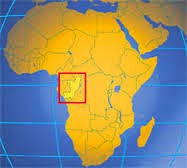
Over 75 million people live in the Democratic Republic of Congo, the second largest country in Africa by area, and the 11th largest in the world. Right next door is located the Republic of the Congo. Despite the similarities in names, these are two distinct countries with separate histories. The DRC gained its independence from Belgium on the 30th of June, 1960. Throughout recent history, it has been known by many names including Congo Free State, Belgian Congo, Republic of the Congo, and Zaire.
The Democratic Republic of Congo

The land area of the DRC in comparison with that of the USA

Neighboring country: Republic of the Congo
The official language of the DRC is French, with Lingala, Kikongo, Swahili and Tshiluba as other nationally recognized languages. The city of Kinshasa, located on the Congo River, is the designated capital of the DRC with a population of over 9 million people. Kinshasa is also the second largest francophone urban area in the world, after Paris.

Kinshasa skyline by night

When it comes to religion, the DRC has a relatively long history of Christianity, beginning with the arrival of the Roman Catholic Church in the late 1500's. Later on, as in many places around the world, the colonial powers worked hand in hand with Christian missionaries, further cementing the religion's hold in the country. Today, 35 million people in the DRC are Roman Catholics, translating to roughly half of the population. 80-95% of the total population, whether Roman Catholic or not, identifies as Christian. In very recent years, Islam has been slowly growing as a religious presence as well.

A church in Kindu, DRC
In terms of the holidays, this means that Christmas is widely celebrated in the DRC. However, unlike many of the countries which we have covered so far, Christmas in the Democratic Republic of Congo is more of a religious observation than a commercialized holiday. To learn more about the holidays, I spoke with Dr. Annie Kinwa-Muzinga, from the UW-Platteville Department of Agriculture, who is from the DRC. I learned that gift giving is not traditionally a part of Christmas. Instead, Congolese celebrate with their families by attending church, which usually begins at 10:00 pm and runs until 12:00 a.m. Some stay to continue to pray until the dawn.

Dawn on the Congo River, which separates DRC capital Kinshasa from Republic of the Congo capital Brazzaville
Another important tradition for Roman Catholic families is to watch the Pope's Christmas Address on T.V. Dr. Annie talked about Christmas memories of watching the Pope's Address every year on a small black and white T.V. set as a child.


Pope Francis
While Christmas may be more of a spiritual holiday, the celebration of New Year's on the other hand, is a much noisier holiday! It's called "Cross Over", referring to the moment when the old year crosses over into the new. Congolese gather for a big dinner with their families and this is generally an occasion on which meat is eaten. For those with the means, a goat or cow will be slaughtered for the meal. For others, chicken or fish makes up the special dish. Those in the community who are wealthier generally hold fancy parties for the occasion. Once again, there is a heavily spiritual component, and beginning at 8 p.m., the churches are packed and the people sing and dance until midnight. It is felt that the crossing over of the New Year should be spent with God, so at about a quarter to midnight, the pastor will ask everyone to begin praying.  About 30 minutes later, Dr. Annie says, the parties begin! People dance and sing in the streets, and visit all of the parties wishing a "Happy New Year!" to everyone along the way. As the New Year begins on the morning of the 1st of January, you will see kids with brand new clothes. New Year is celebrated in the DRC for the entire month of January. All the way up until the 31st of January you will continue to hear New Year's greetings and people will often expect small gifts as well! 


Thanks to Dr. Annie for her help! If you are interested in learning more about the Democratic Republic of the Congo, check out this article, from CNN, "10 Things to Know Before Visiting the Democratic Republic of the Congo." It discusses things such as the music scene in the DRC as a main export of the country, the Congolese affinity for mayonnaise, and the wildlife (Okapis!) of the country, among other topics. Additionally, be sure to visit the U.S. Department of State's Factsheet or the BBC's Overview for more general information. (Note: the DRC is also a country currently facing immense challenges, with a brutal recent history, including the Second Congo War begun in 1998 and with fighting continuing today. The United Nations has called this country the "rape capital of the world." Travelers are currently advised not to visit the DRC. These are not issues I discussed in the blog post, but there are ample information sources online that I would encourage everyone to utilize to learn more about what is occurring. To begin with, read the numerous articles pertaining to the DRC on the New York Times, or from the Wall Street Journal, or any other sources you may find.)

Friday, December 13, 2013

Frohe Weihnachten und einen guten Rutsch: Holidays in Germany

Holiday Series Day 10: Frohe Weihnachten und einen guten Rutsch


Christmas market in Cologne


Well, it was bound to happen. After the Netherlands, I think Germany was the most obvious choice for me to write a holiday post about considering my background in German language and culture. For those of you who don't know, I am bit of a German fanatic- no not in the creepy stalker, German dolls on my shelf style. More of an appreciation for the country's dynamic language, current economic status, and open minded cultural style. I have been studying the German language since High School, and despite my parents' misgiving, I have also committed myself to completing the German language minor here at UW-Platteville.  Since I am also the current German Club president (yes, we have one, don't laugh too loudly), I get to spend lots of time with like-minded individuals practicing my German and raving over the culture. Now, all that being said, I still wanted to get a true German holiday perspective from a person who is as German as they come- my current Professor, Madelon Kohler-Busch (MKB- our fearless guide to all things German).

Hailing from Munich, MKB is an outspoken, free thinking personality that never ceases to amaze and is a solid source for all things German. She is natürlich very passionate about the German culture, including all things green such as their outstanding recycling program, but in particular German traditions. When I asked her if she could give me some more insight into German holiday festivities besides the cookie cutter version I had been spoon-fed since High School, she decided to spend an entire class period discussing German holiday customs- including the main stays and new arrivals. Of course, typical me I will be throwing in a few stories and other random information.


The Advent

Alright, firstly, you should all know that the Germans don't simply celebrate Christmas, they essentially celebrate throughout all of December. How, you ask? Well, it all comes down to a wonderful thing called the advent. The Adventzeit or time of Advent begins on the first Sunday in December with a lighting of the first candle on the Adventskranz or Advent wreath. Granted, by that time you will have counted down a few days on the Adventkalendar or the Advent calendar, enjoying all the goodies as the days go by. The Adventskranz is a way to mark down the days until Christ's birth. Each candle symbolizes a facet of Christ or holiness, and generally there is a fifth Christ candle lit on Christmas eve that stands in the center of the wreath. The wreath itself is traditionally comprised of pine boughs, three red/rose/purple candles, a white candle and other festive decorations. Each family has their own unique Adventskranz; sometimes they even are passed down from generation to generation. The idea is essentially the same for the Adventskalendar. Another way to countdown the days will Christ's arrival, the store bought version is usually a contraption of decorated cardboard with all 24 numbers in place. On each day the corresponding number is opened and the sweets or trinkets inside are revealed. In my family, the best behaved child always got to open the number of the day (which was of course always me...). With the DIY craze spreading right now, more and more families are getting creative about their calender designs such as the baggie style one seen below.

         
The Adventskranz on the fourth Sunday            
Store bought Adventskalendar
Homemade Adventskalendar by a creative family

Deutsch Decor

A Weihnachtspyramide in one of the markets
There are many elements that make up modern decorations for the average German household or city, but some have a bit longer traditions than others. The Weihnachtspyramide is one such. A kind of carousel with several levels depicting images of angels, Christ and his followers, the Christmas pyramids of Ore Mountains are said to be a predecessor to the Christmas tree. The spinning motion of the pyramid's levels is accomplished by using the rising heat from candles to spin the top propeller above. The pyramids can be as simple or intricate as you please, and come in all shapes and sizes. Most families only possess a small table sized version, whereas in Christmas markets and city centers the pyramids can get larger than 20 ft. (~7 meters).


Traditional Weihnachtsbaum with candles


Now, on to the infamous Tannenbaum. That's right, the Christmas tree. Although the Russians will tell you they are responsible for the first Christmas trees, for sanity's sake let's just acknowledge it as being German for the next ten minutes. Hailing from the Black Forest traditionally, Christmas trees have been a part of German Christmas traditions since Martin Luther's time. It's said that the was so profoundly amazed by seeing the snow glistening off a massive pine tree, that he felt the need to share it's beauty with his family. At the time, I'm sure his family thought he had officially lost his marbles, but the concept of dragging a pine tree into the house and decorating it has stuck. Although we use electric lights mostly nowadays, it was originally candles that graced her boughs. In place of our shiny ornaments, it was common to use nuts and fruit. Of course, beyond the home, the Germans still do a wonderful job of sharing the joys of Christmas through holiday decorations. Which brings us to the next point: Christkindlmarkt or Weihnachtsmarkt.


Christmas candles are a central part of German tradition, supposedly sharing the light of Christ and good will


Weihnachstmarkt!

When traveling through most middle to large scale German cities in the heart of winter, it is nigh on impossible not to stumble across this splendid Christmas markets. I use the word "stumble" lightly, since they are hard to miss with their festive lights, traditional wooden market stands and abounding Christmas delights. The Christmas market is an excellent opportunity to step into another time in German history, when life was simpler and all you needed was a glass of gluhwein with a few pieces of Lebkuchen to brighten your day (though for me, that statement still holds true). The markets are kind of the epitome of German Christmas spirit and are more than just a hot spot for tourists- natives find just as much delight wandering their alley ways. Packed with more than just gifts and sweets, there is usually carolers to be found strolling the walkways and singing versions of "O Tannenbaum" while music from a nearby carousel provides a background beat. Large Christmas trees are decorated with as many lights as possible and in some, such as the Dusseldorf market, gigantic Weihnachtspyramide can be found as well. I'm not going to go into too much detail regarding what brought about the Christmas markets (since this blog is already starting to get long) or elaborate any further on their splendor, but please promise me right now that you will add "visit a German Christmas market" to your bucket list. In case you can't visit Germany, Austria, Switzerland or any other German speaking countries in the near future, the Midwest has a pretty decent version in the heart of Chicago called the Christkindlmarket that is going on right now.  
 
A festive Weihnachtsmarkt in all it's lit up glory
Spiced hot gluhwein


Das Essen

Lebkuchen hearts sold in every Christmas market and bakery
 Now, there is a key part associated with the Advent that I failed to mention: Weihnachtsplätzchen aka Christmas cookies aka kekse or keks. Yes, Christmas cookies are a staple food all around the world during the holidays, but German bakeries have been mastering the art of these splendid confections since the dark ages. "Plätzchen" was originally used to describe hard biscuits that were made to last longer and soften as they aged. Eventually, a sweeter version was developed and was only to be eaten on particular days in winter as deemed by the church. It was believed that these cookies or kekse were too sweet for other times of the year, but since it was winter time the extra calories were allowed. Over time, that tradition behind the "once yearly cookie binge" was obviously dropped and the wide world of kekse was born. I don't know all the details, but nowadays the keks are to be eaten in a particular chronological order during the Advent. For example, you aren't supposed to eat plätzchen before the first Advent candle is lit, and Lebkuchen (gingerbread) and honey cookies are supposed to be for the first week of the Advent. The cookies were originally supposed to also be a form of health for the harsh winters, since most of them include items such as honey, nuts, and spices. In fact, the star cookie of the German holiday is "Lebkuchen" which roughly translates to "cake of life." The list of plätzchen varieties is quite extensive (at least 18 official ones as of right now), but it includes spekulatius, lebkuchen, and marzipan cookies to name a few. Now that I have told you all that, keep in mind that the most important part about the plätzchen is how they are made. MKB stressed that the true importance is that families will get together and have special baking parties. The cookies are just a sweet excuse for more holiday festivities, singing Christmas songs and time with family. 

Just a small selection of all the varieties of Plätzchen
Since we're on the topic of food, let's keep this train of delicious thoughts moving. German, like most other nationalities, love a good holiday feast with family. They take the time to prepare the meal together, then set the table with decor and sweets as a team. The simple "togetherness" of the holiday is what Germans seem to relish most. Understandably, I think their food selections should rank number two on that list. A true German Christmas would not be complete without the following:  roasted carp and poultry (preferably goose or duck) as the entree; a few side dishes of sauerkraut, potatoes, cabbage and kale; a wide variety of breads throughout the meal including the Christstollen or fruitcake at the end; and of course either some form of fondue or racletten (both if you're lucky!). The racletten is similar to the Dutch gourmetten. Essentially a small grill in the center of the table, it is used to create all sorts of new dishes by combining items from across the table. By this time, I'm sure you've caught on that Germans are quite proud of their traditions. Well, that extends deeper when looking at each individual state within Germany. Comprised of 16 nation states including Bavaria and Nordrhein-Westfalen, each is quite proud of their own special traditions. For example, in northern Germany in areas like the Meck-Pom, potato salad with sausages is customary, and in the south regions around Baden-Württemberg it is more common to have Schäufele (a corn smoked ham). Regardless of which region you are from, you an guarantee that fine wines, delectable beers and piping hot mulled wine will provide the beverage foundation for any good holiday meal.

Poultry with red cabbage and dumplings is a very popular Christmas Dinner


 St. Nick & Friends

Something I have thus far failed to discuss with you fine readers (yes, Nate, all three of them), is the traditions regarding St. Nick (the Americanized version and the original). Similar to the Dutch tradition, the Germans celebrate Sanktnikolaustag on the night of December 5th. It's not as widely celebrated in Germany any more as it is currently in the Netherlands, but on the night of the fifth, all the good girls and boys still lay out their boots or Nikolaus-Stiefel in the hopes that sweet things will be found the following morning. Now, things get a little bit more macabre in the southern parts of Germany where St. Nick is accompanied by Knecht Ruprecht, a dark figure who questions how well behaved children have been and beats the naughty ones with a stick. Similar to Knecht Ruprecht, is the Krampus figure. Typically depicted as a hairy devil monster, he comes on the same night to punish all the children who have misbehaved. Supposedly he travels from house to house collecting all the naughtiest children and drags them back to his lair in a burlap sack. It is common to see young men dressed up in Krampus costumes roaming from house to house frightening little kids with rusty chains and bells. In other words, if you plan to visit Germany and are still small enough to be carried away in a sack, make sure you've been good, or else. Below is a video of a Krampus parade. Yes, they have those.

Sankt Nikolaus und die Krampus

Now, besides good ol' Knecht Ruprecht and his stick, St. Nick, and the krampus, the Germans also have incorporated our "Santa Claus" into their customs via the Weihnachtsmann. In his universal red and white attire, the Weihnachstmann comes on the "holiest night of the year," Christmas eve, to bring presents to all the girls and boys. Although some older Germans are not very fond of his commercialized intrusion into German holiday traditions, the children of course are more than happy with an opportunity to receive more gifts.


Neujahr & Silvester!

The finish to the holiday season is Neujahr and Silvester. Like most European new year's festivities, Silvester takes place on the last day in December is full of feasting, large holiday parties, sweet treats and fireworks. The common greeting is "Prosit Neujahr!" and as the midnight bell sounds people celebrate in mass in all the major cities. I apologize for my lack of elaboration, but here are a few photos to get you in the new year spirit.

Krumkake rolls with powdered sugar!

The pig is a common sign of good luck in German tradition
In certain areas, Neujahrbrezeln are given out

Berlin has one of the largest celebrations of New Year's in all of Germany


And with that, I bid you all a ...